 Meghan and Harry’s Quiet Move That Could Change Everything in the UK
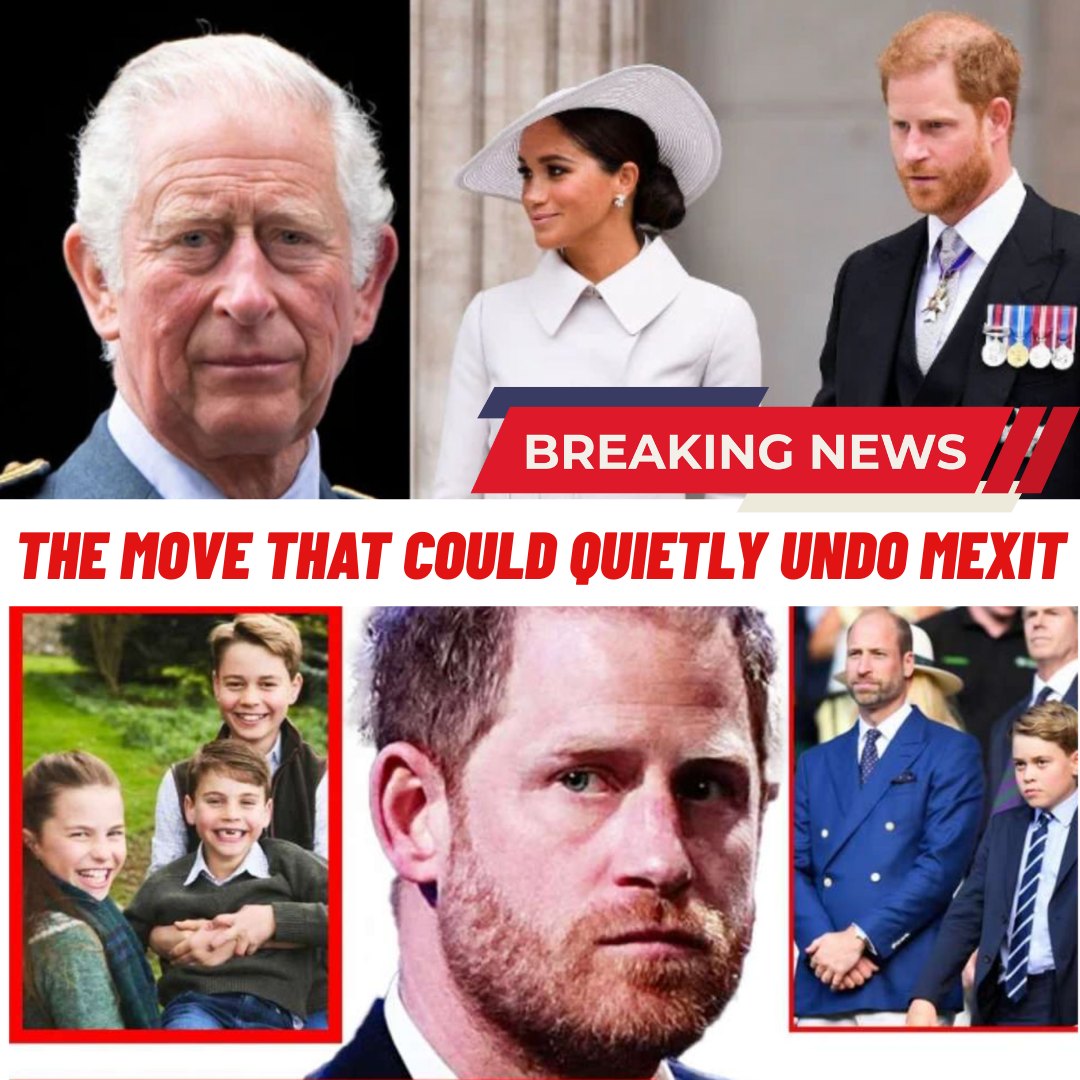
Meghan and Harry’s Plan to Return to the UK: The Security Battle That Could Rewrite ‘Mexit’
Prince Harry is once again at the centre of a storm that threatens to reopen some of the deepest wounds within the British monarchy.
After years of legal defeats, public criticism, and bitter family rifts, the Duke of Sussex is making what insiders describe as his most determined and strategically significant move yet: a renewed push to regain armed police protection during visits to the United Kingdom.
At first glance, the development may appear to be a narrow dispute over personal safety. But behind closed doors, royal watchers, legal experts, and political insiders say the implications are far broader—raising questions about Harry’s long-term intentions, the future of his relationship with the Royal Family, and whether the controversial “Mexit” settlement is quietly being dismantled piece by piece.

A Surprise Revival After Legal Defeat
For much of the past four years, Prince Harry’s campaign for UK security appeared all but exhausted.
Following his dramatic decision to step back from royal duties in early 2020 and relocate to North America with Meghan Markle, Harry lost access to the automatic, taxpayer-funded police protection granted to working members of the Royal Family. The arrangement, overseen by the Executive Committee for the Protection of Royalty and Public Figures (RAVEC), was part of a broader redefinition of his status.
Harry fought back in court—twice—and lost. Judges ruled that the decision-making process was lawful and that his circumstances no longer warranted the same level of state-backed security.
Yet now, in a development few expected, Harry has succeeded in forcing the convening of a new Risk and Benefit (R&B) assessment board. The review will reexamine the level of threat he faces while on British soil and determine whether the existing arrangements remain appropriate.
The assessment, which is reportedly due to conclude next month, has sent shockwaves through royal circles.
What Is an R&B Assessment—and Why It Matters
Risk and Benefit assessments are not routine exercises. They are typically triggered only when credible new intelligence, significant changes in threat levels, or major shifts in circumstance emerge.
According to sources familiar with the process, Harry’s legal team has argued that the nature of threats against him has evolved, particularly in light of global media exposure, online extremism, and heightened hostility toward high-profile public figures.
If the board concludes that the risks outweigh the rationale for limiting protection, it could recommend reinstating armed police security—either fully or on a case-by-case basis.
Such a move would represent a stunning reversal of the principles underpinning “Mexit,” the deal that formalized Harry and Meghan’s departure from royal life.
Undermining the ‘Mexit’ Settlement
When Harry and Meghan stepped down, the message from Buckingham Palace was clear: with independence came consequences.
They would no longer represent the monarch, no longer receive public funding, and no longer enjoy the privileges reserved for working royals—including full-time security.
Reinstating armed protection would blur that line.
Critics argue it would create a dangerous precedent, effectively allowing former royals to retain state benefits without fulfilling public duties. Supporters counter that security should be based on threat levels, not job descriptions.
Either way, the symbolism is potent. Royal commentators say that restoring Harry’s security—even partially—would signal a softening of the hard boundaries drawn in 2020.
A Strategic Campaign, Not a Personal Plea
Legal analysts note that Harry’s persistence appears less emotional than methodical.
After losing successive lawsuits, many expected him to retreat quietly. Instead, sources suggest his team pivoted tactics, focusing on procedural avenues rather than outright legal confrontation.
“This isn’t about re-litigating past decisions,” one legal expert said. “It’s about forcing a reassessment under new parameters.”
Harry has repeatedly claimed that he feels unsafe in the UK without police protection, pointing to past incidents involving paparazzi chases and threats from extremist groups. His legal filings emphasize that private security teams lack the authority and intelligence access necessary to manage such risks.
A Return to the UK—In More Ways Than One?
The renewed focus on security has inevitably sparked speculation about Harry’s broader intentions.
If armed protection is restored, even temporarily, it would remove one of the major obstacles to extended stays in Britain. That, in turn, raises questions about whether Harry envisions a more permanent or semi-regular UK presence.
Royal insiders say the prospect is deeply unsettling to some members of the family.
Prince William, in particular, is said to oppose any arrangement that would bring his brother back into close proximity with the core royal operation. The relationship between the brothers remains strained following Harry’s explosive memoir and media interviews, which aired deeply personal grievances.
Public Opinion: A Major Obstacle
Any move toward reinstating taxpayer-funded security would face fierce public resistance.
A recent poll found that more than 90 percent of respondents oppose public funding for Harry’s protection, arguing that he relinquished those rights when he chose to leave royal life.
The issue is politically sensitive. At a time of economic pressure and public sector strain, the optics of funding security for a California-based prince are far from favourable.
Government officials are acutely aware that any approval could provoke backlash—not just from voters, but from MPs wary of appearing indulgent toward royal privilege.
Political Undercurrents and Quiet Influence
Adding another layer of intrigue is the perceived involvement of senior political figures.
Both the current and a former Home Secretary—whose department oversees royal protection—have previously expressed sympathy toward Meghan Markle, including signing a public letter supporting her amid claims of mistreatment.
While no evidence suggests improper influence, critics argue that personal sympathies could shape how the reassessment is handled behind the scenes.
Supporters dismiss such claims as conspiratorial, insisting that the R&B process is grounded in objective threat analysis.
Still, the perception alone has fueled controversy.
A Thaw With King Charles?
Amid the legal manoeuvring, signs have emerged of a cautious warming in Harry’s relationship with his father.
The Duke recently held a private meeting with King Charles, a development that surprised many observers given their previously distant relationship. Palace sources describe the encounter as polite but reserved, with no immediate breakthroughs.
Some royal watchers believe the security review could be part of a broader, incremental reconciliation strategy—one that prioritizes practical arrangements before emotional repair.
“If Harry feels physically safe in the UK,” one insider said, “it becomes easier for everything else to follow.”
What About Meghan and the Children?
Perhaps the most contentious question is whether any restored security would extend beyond Harry himself.
If armed protection is granted, pressure will mount to include Meghan Markle and their two children. That prospect is controversial, particularly given Meghan’s fraught public image in Britain.
Royal commentators warn that extending protection to the entire family would significantly escalate costs and political sensitivity, especially amid lingering public hostility.
Security experts also note that Meghan’s profile attracts a different type of attention, potentially altering risk calculations.
Family Strain on Multiple Fronts
Complicating matters further is the ongoing health crisis involving Meghan’s father, Thomas Markle.
He is reportedly in intensive care following leg amputation surgery, a development that has renewed scrutiny of Meghan’s strained relationship with her family. The situation highlights the deeply personal pressures unfolding alongside the public drama.
Observers note the irony: while Harry pushes for protection rooted in family legacy, Meghan continues to navigate painful estrangement from her own relatives.
Quiet Royal Divisions Elsewhere
The Sussex saga is unfolding against a backdrop of broader royal tensions.
The upcoming private christening of Princess Beatrice’s daughter, Athena, is expected to proceed with notably limited attendance from senior royals. The absence of King Charles, Prince William, and Kate Middleton has been interpreted by some as a sign of lingering sensitivities following recent scandals.
While officially downplayed, the selective attendance underscores the fragility of royal unity.
A Moment of Levity for Camilla
In contrast to the tension, Queen Consort Camilla was recently seen enjoying the set of Rivals, a provocative television drama based on Jilly Cooper’s novels.
Her relaxed appearance offered a rare glimpse of levity within royal life and signaled continued support for British arts. For some observers, it was a reminder that the monarchy continues to project normalcy even amid internal turbulence.
A Decision That Could Change Everything
As the R&B assessment nears completion, anticipation is building.
The outcome could redefine Harry’s status, reshape his relationship with Britain, and reopen debates about the boundaries of royal privilege in a modern constitutional monarchy.
Whether viewed as a matter of safety, symbolism, or strategy, the stakes are unmistakably high.
One decision—made quietly, behind closed doors—may yet rewrite the final chapter of one of the monarchy’s most contentious departures.
And once again, the House of Windsor waits.